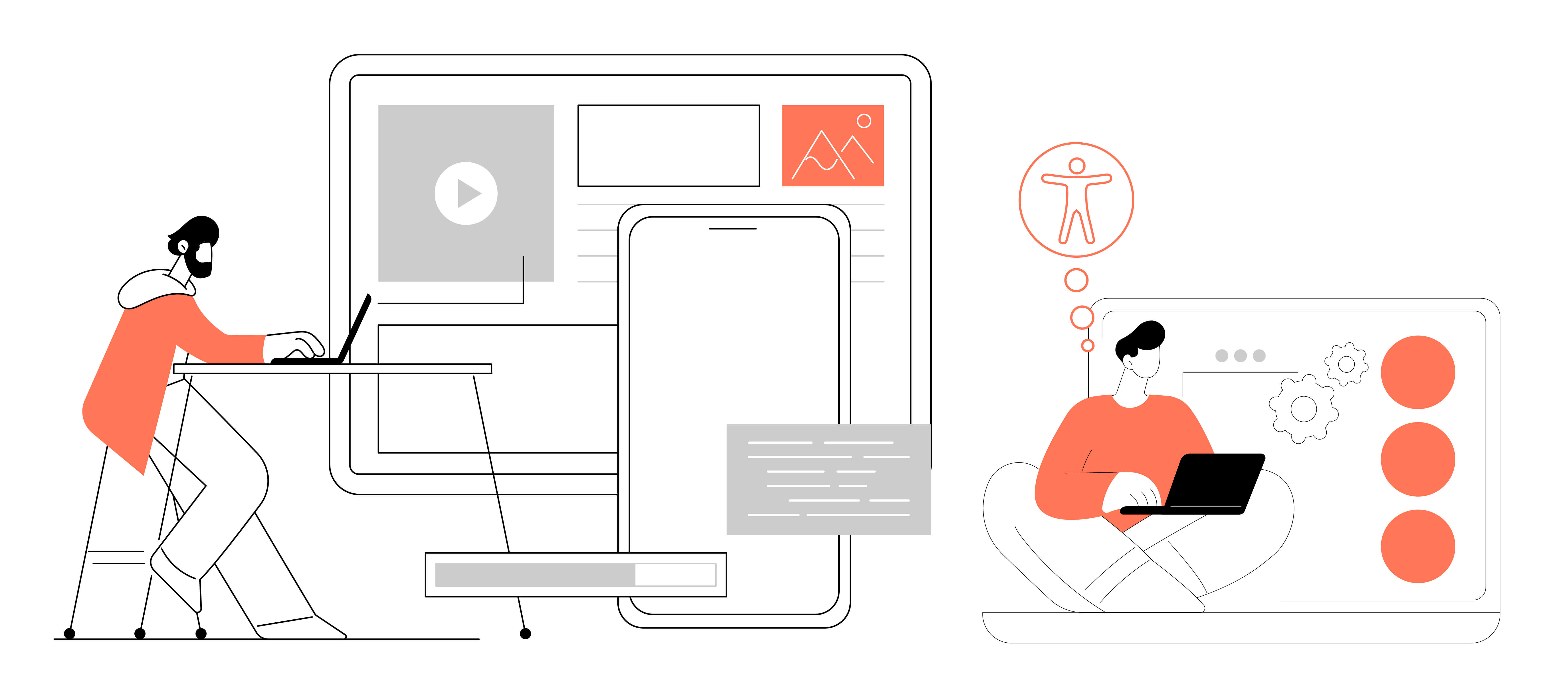
Many websites aren’t accessible to people of all abilities, meaning that millions cannot interact and engage with important information. According to the World Health Organisation, 1.3 billion people, or 16% of the world's population, have a significant disability. Accessible web design ensures that brands don’t exclude these people, as this can result in legal challenges, lost revenue, and, in some cases, brand damage.
Our guide explores how web page accessibility can benefit everyone, from businesses to regular users. Read on to discover why it matters, who it supports, common barriers to entry, and how to assess your website’s accessibility performance.
What is website accessibility?
Web accessibility involves making a website understandable and usable to everyone. It encompasses the design of websites, documents, and online experiences, making it so anyone can use it, regardless of their ability, device, or environment.
Why website accessibility matters
Accessibility should be a key part of digital content creation to provide an inclusive experience for anyone, regardless of their ability.
Accessibility benefits everyone
Website accessibility isn’t only for those with disabilities or impairments – it's for everyone. Many aspects of accessible design were initially built for the needs of those with disabilities but have since benefitted the broader population.
For example, the curb-cub effect refers to sloping pavements on roads, which were introduced to increase accessibility for wheelchair users. Now, they are used by millions, from women with pushchairs to cyclists. These same principles can be applied to websites, making changes to increase access for all.
It's a human right
Accessibility isn’t a nice-to-have; it’s a human right as defined by global standards. This includes WCAG, UK Equality Act, European Accessibility Act, ADA, and EN 301 549. In AbilityNet's Attitudes to Digital Accessibility survey 2025, legal compliance was seen as the leading reason for website accessibility at 73% of all businesses surveyed.
It helps to ensure fair and equal access to information, services, and products, regardless of ability. It ultimately reduces barriers and prevents unintentional exclusion, making way for a more inclusive digital environment for everyone.
Accessibility improves business performance
Alongside making your website more inclusive, web accessibility can have numerous financial benefits. It opens your website and brand to a broader audience of millions of people with a range of abilities.
Businesses that make web accessibility a priority gain a competitive advantage, as they are seen as more reputable and trustworthy. Public sector organisations, from schools to councils and government, have often led the way as they are required to be compliant or risk excluding users and losing trust.
Who does website accessibility support?
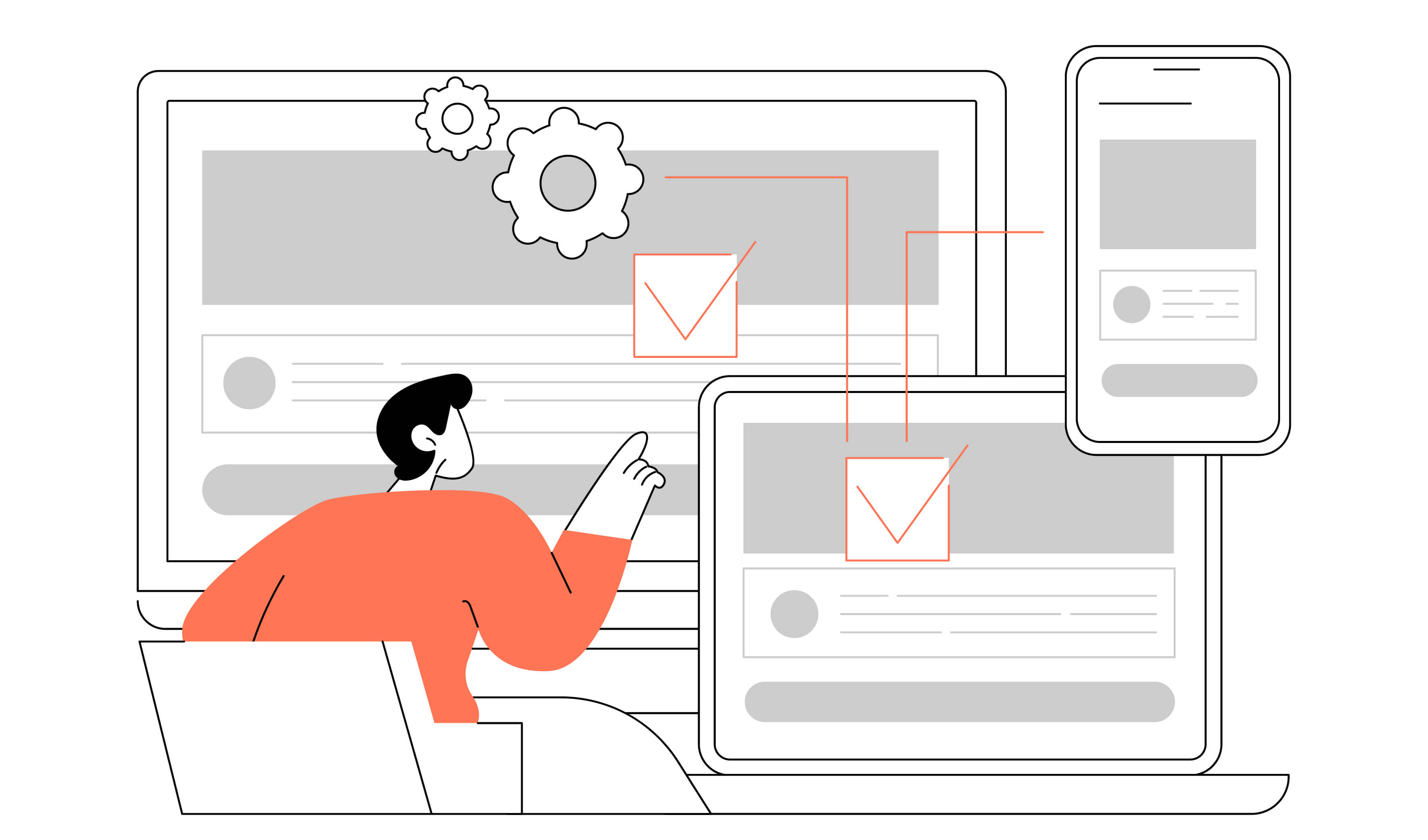
Web accessibility can benefit a wide range of people, often those who may not first expect it.
People with permanent disabilities
Those with permanent disabilities are often considered one of the primary beneficiaries of website accessibility, as they rely on clear features to access important information, products, and services. This can include those with:
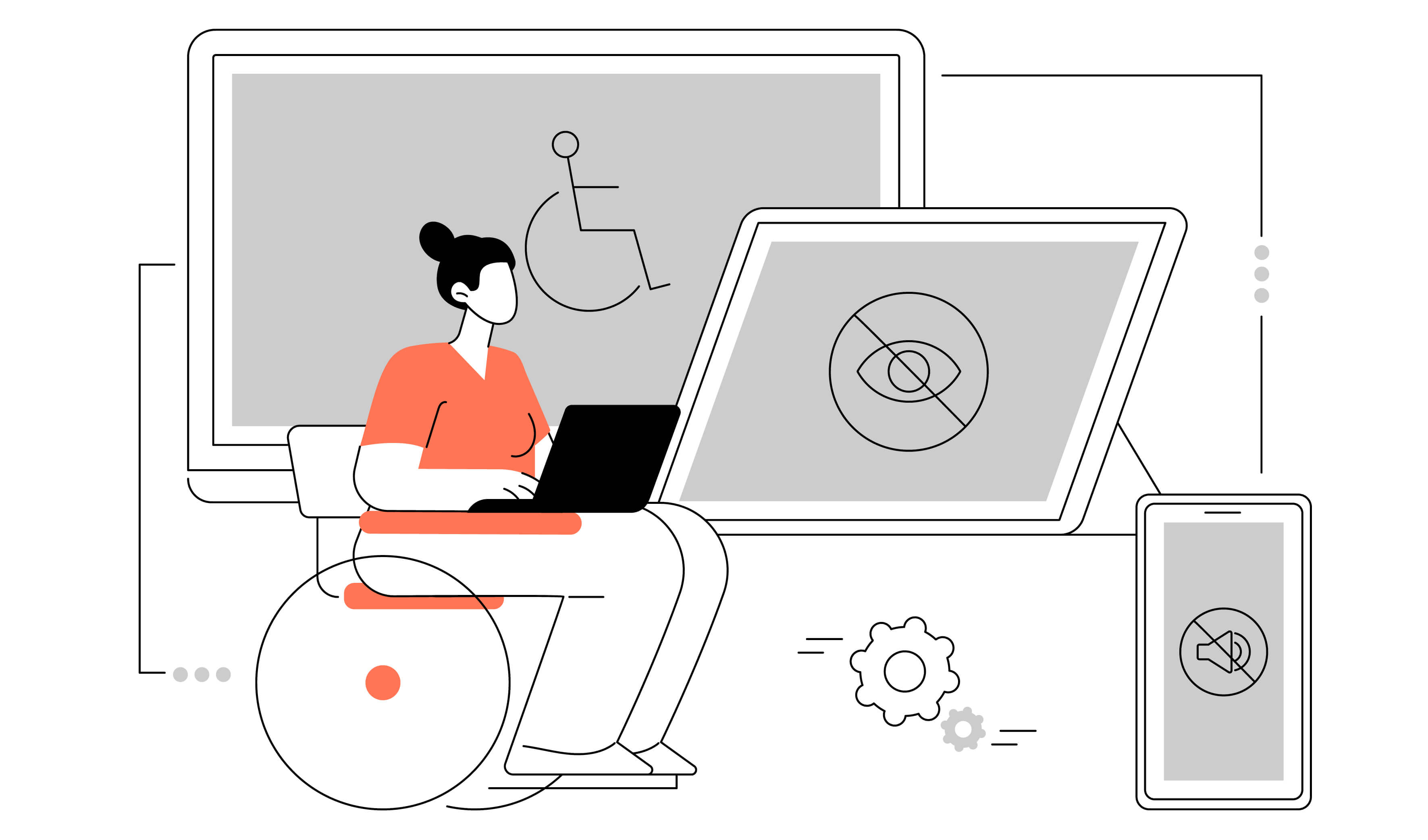
- Visual impairments, including low vision or colour blindness.
- Hearing impairments, including deafness and partial hearing loss.
- Mobility limitations, including paralysis, amputations, strokes, arthritis, or a temporary injury.
- Cognitive or learning disabilities, including dyslexia or a brain injury.
- Speech impairments, including stutters or problems with articulation.
Older people
The elderly can be less digitally abled than those who are more familiar with computers and websites. In addition, they may be more likely to experience vision, hearing, memory, and mobility impairments. As a result, clearer layouts and accessibility features are especially required for full accessibility.
People with temporary disabilities
Accessibility can be useful for people who have a temporary disability, preventing them from accessing websites as usual. This encompasses people with a broken arm, eye infection, or temporary hearing loss.
People in challenging situations
There are numerous situations where anyone can benefit from website accessibility. This includes:
- Environments that are noisy or quiet, where closed captions still provide access.
- Areas that have bright sunlight and websites that have high contrast.
- Places that have slow or unstable internet connections, so ensuring features work regardless of connection.
- Busy environments that require multitasking or hands-free situations.
Common accessibility barriers on websites
Now that you understand the types of people who require website accessibility, we’ll explore barriers that they may face.
Lacking keyboard operability
Not all users access content using the mouse. Keyboard accessible content helps users with a range of disabilities and even temporary injuries. Assistive technology users, like those using screen readers or voice control, depend on full keyboard accessibility.
Cluttered layouts
Cluttered layouts increase cognitive load for users with short-term memory or learning disabilities. This can make it difficult to understand the flow of information and make navigation time-consuming, even when using screen readers.
Lack of hands-free option
People with limited mobility or those who need to multitask in their work require clear and scannable information to complete tasks more quickly. These users may require the option of voice control for hands-free operation to navigate without a keyboard and mouse.
Unable to hear videos
Those with hearing impairments or anyone in a loud environment, like public transport, can benefit from closed captions on videos. Closed captions allow users to gain information regardless of their hearing ability or their environment.
Understanding accessibility standards
There are many guidelines and accessibility requirements that businesses are required to comply with, including public-sector organisations. Non-compliance with these standards can result in exclusion, legal challenges, and reduced accessibility to the public.
Web Content Accessibility Guidelines
Web Content Accessibility Guidelines (WCAG) are internationally recognised standards that help make digital content more accessible, and are set by the World Wide Web Consortium. While they are not legally required, they are a recognised technical standard to meet legal accessibility requirements. WCAG follows four principles to improve web accessibility: perceivable, operable, understandable, and robust (POUR).
These WCAG compliance principles help to address the following issues commonly found on websites:
- Poor colour contrast.
- Missing or confusing alt text.
- Inaccessible PDFs made from Word without suitable formatting.
- Missing form labels.
- Buttons and links lacking descriptive text.
- Confusing heading hierarchy.
- A lack of visual keyboard focus.
- Status messages that cannot be announced by screen readers.
- A lack of document language settings.
WebAIM has discovered common accessibility obstacles, including:
- Around 80% of homepages have insufficient colour contrast, which isn’t readable to people with vision impairments.
- 18.5% of all home page images had missing alt-text, which helps those using screen readers understand the contents of images.
UK Equality Act
The UK Equality Act requires all organisations to make websites and apps accessible for all. UK businesses must make reasonable adjustments to increase inclusion and could face legal and financial consequences if found to be non-compliant. The UK Equality Act also references WCAG principles like POUR.
European Accessibility Act
The European Accessibility Act enhances web accessibility for digital products and services in EU and non-EU member states that operate in the union, removing barriers across different countries. It was introduced in 2019 and came into effect for most sectors in 2025, with penalties of up to £200,000 or 4% of global turnover for non-compliance. Like the UK Equality Act, it also adopts WCAG principles.
EN 301 549
EN 301 549 is a European standard ensuring that all aspects of information, communication, and technology are accessible to people of all abilities. This includes hardware, software, and websites, and is being updated to support the European Accessibility Act.
The Americans with Disabilities Act
The Americans with Disabilities Act (ADA) requires all state and local government websites to be accessible. While it doesn’t refer to specific technical standards, it also uses WCAG as a guide for compliance.
How to assess and improve your website’s accessibility
Understanding the best ways to assess your website’s accessibility allows you to take practical steps towards making sure your brand is accessible to all users online.
External accessibility audits
Website accessibility audits from independent organisations allow businesses to understand and address any issues. They can provide expert advice and recommendations to increase compliance with standards and laws, and ways to provide great experiences for all users. They are seen as essential due to mounting legal pressure across different regions, as well as the capability to improve UX and brand trust.
Testing methods
Auditors can blend a mix of automated and manual reviews for increased accuracy. Automated scans can identify technical issues against worldwide standards, while manual testing helps to spot issues with keyboard navigation, screen magnifiers, screen readers, and voice control.
How we can help
At Blue Frontier, we offer WCAG Accessibility Testing to ensure your digital products are accessible to all users. From PDFs to websites, our specialists test for alignment with A, AA, and AAA levels to help create a user experience that increases both usability and compliance. We use automated accessibility testing tools and a manual approach to provide a comprehensive report and list of recommendations for your business.
We can also build websites with accessibility in mind, ensuring that you’re compliant from the start. Our specialist team uses international accessibility guidelines for websites to ensure it is easy to navigate and understand. We ultimately become your digital partner, helping to provide insight into how to increase compliance and accessibility across your digital offering.
Remain compliant and inclusive with website accessibility
Website accessibility removes any barriers to entry, giving users equal access regardless of ability. It positions your brand as inclusive and compliant, enhances user experience, and expands the appeal of your website to new audiences.
Accessibility goes beyond just helping those with disabilities; it also supports older people, those with temporary disabilities, and anyone in challenging environments. Investing in accessibility isn’t just the right thing to do; it’s a principle that can open the door to many who depend on it.
Discover more about our Accessibility Testing services and how we can help your business provide an inclusive experience for every user, every time.