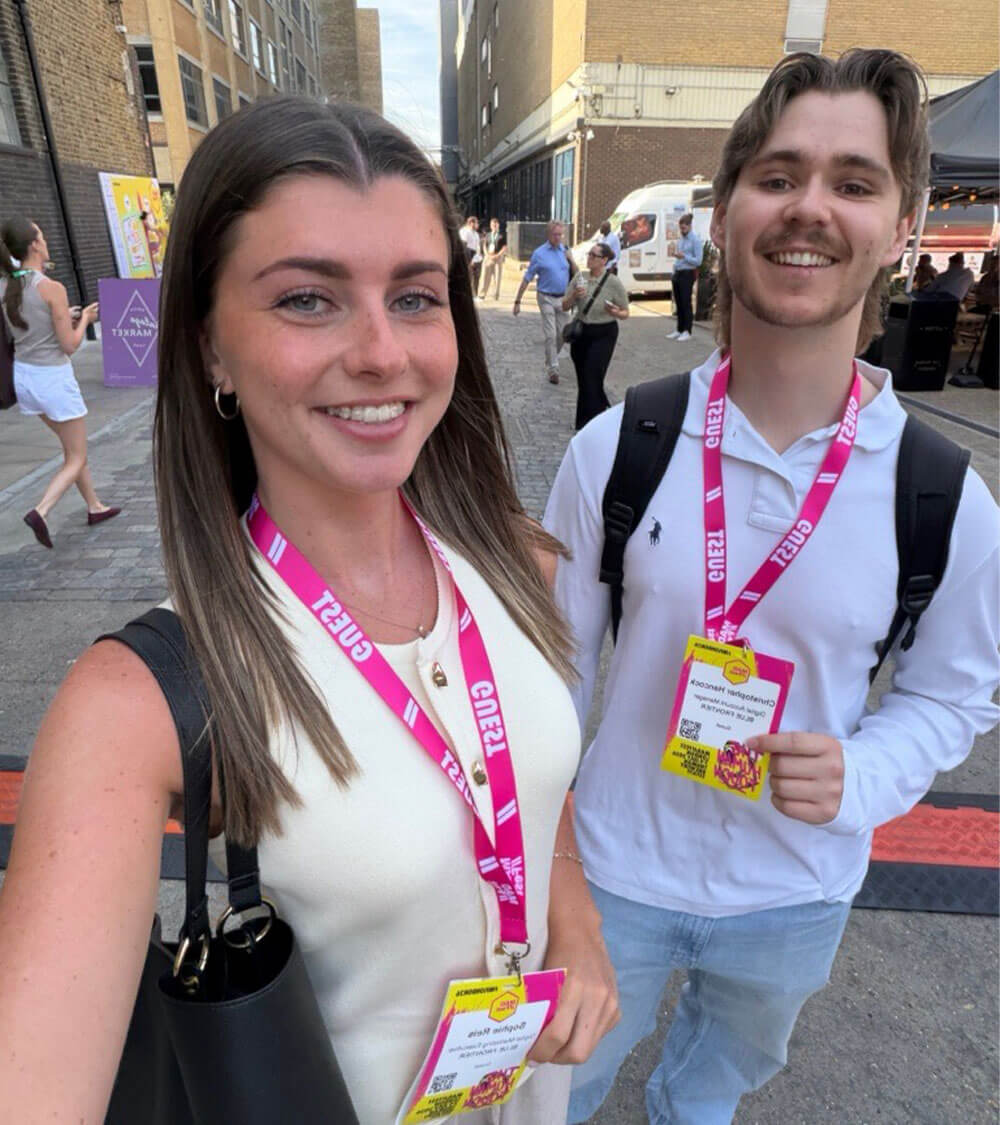
Four members of the Blue Frontier digital team – Sophie Reis, Digital Marketing Executive; Chris Hancock, Digital Account Manager; Dave Livingston-Davies, Senior Graphic Designer; and Olivia Fry, Digital Account Manager – braved yet another London heatwave in July 2026 as they headed to London's iconic Brick Lane to attend one of the UK's biggest marketing events: MAD//Fest.
Hosted at The Old Truman Brewery, the three-day festival welcomed more than 15,000 professionals from leading brands and agencies for a packed programme of talks, networking, and creative inspiration.
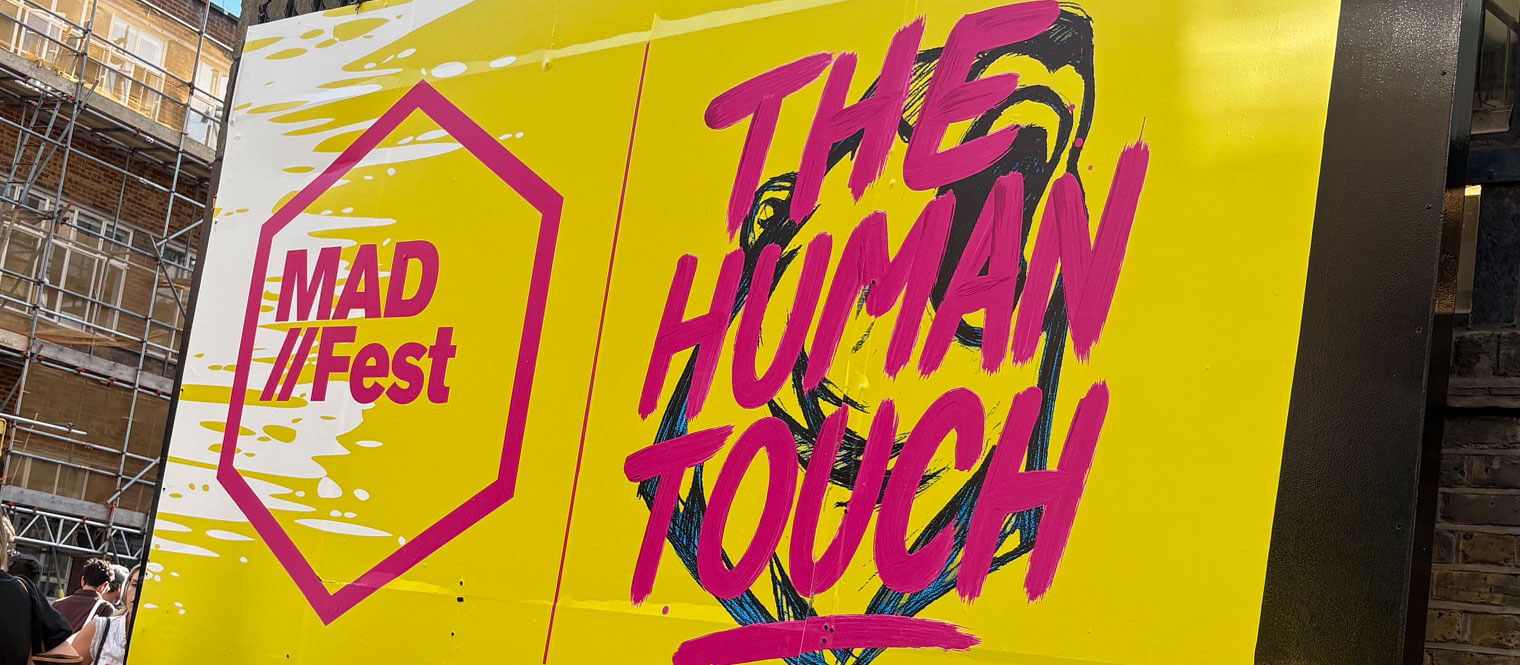
This year's theme, "The Human Touch", explored how marketers can embrace AI and emerging technologies while preserving the creativity, authenticity, and human connections that make great marketing stand out.
With "AI slop" becoming an increasingly common criticism of generic content, the festival focused on how the industry can use technology to enhance, rather than replace, genuinely impactful ideas.
Across the stages, one message was impossible to ignore: the future of marketing belongs to brands that combine innovation with originality, using technology as a tool to amplify human creativity rather than substitute it.
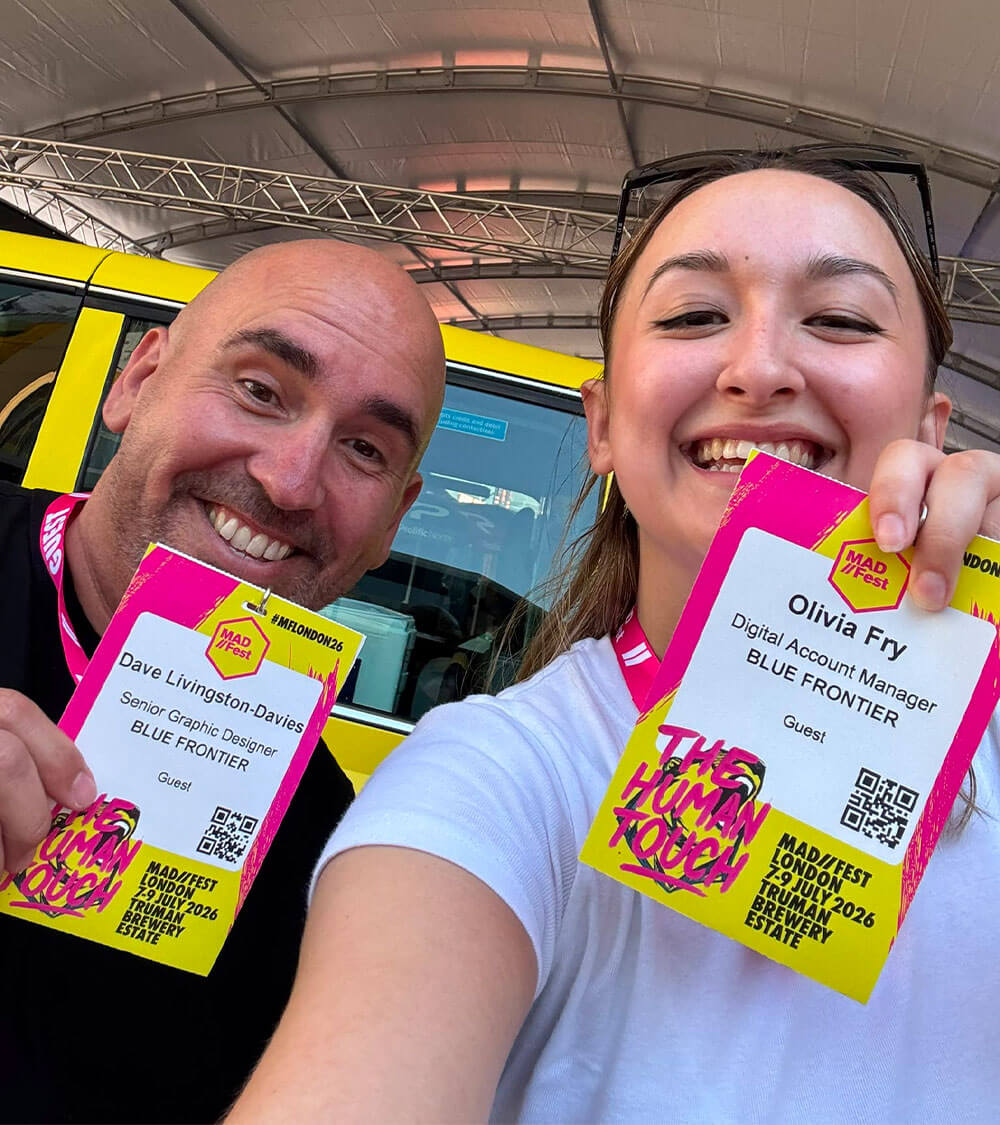
Our top takeaways from MAD//Fest 2026
Although MAD//Fest spans three days, Sophie and Chris packed an impressive number of AI, digital marketing and brand strategy sessions into a single, jam-packed day.
Despite each conference approaching the theme from a different perspective, there was a clear thread running throughout them all: as AI continues to reshape the marketing landscape, the brands that succeed will be those that use technology to strengthen, rather than replace, genuine human creativity and connection.
Here are some of their biggest takeaways from MAD//Fest 2026:
1. AI should enhance creativity, not replace it
As you might expect, AI featured heavily throughout the festival, but perhaps not in the way many anticipated. Rather than questioning whether artificial intelligence would replace marketers, speakers focused on how it can remove repetitive tasks, streamline workflows and accelerate production, leaving more time for strategic thinking and creative problem-solving.
Several sessions reinforced that AI can generate ideas, but it can't replicate taste, judgement or a distinctive point of view. The brands that stand out will be those that use AI to work smarter while allowing people to shape the ideas that truly resonate.
2. Trust is becoming marketing's greatest differentiator
With audiences exposed to more content than ever before, building trust has emerged as one of the biggest challenges for modern brands.
Discussions around community building, creator partnerships and customer loyalty all poincted towards the same conclusion: people buy from people. Whether through founder-led content, authentic storytelling or genuine customer conversations, brands that show the humans behind the business are better positioned to build meaningful, lasting relationships.
Several speakers also highlighted that trust will become even more valuable as AI-powered search and recommendation tools become increasingly influential.
Brands with strong reputations, consistent messaging and genuine authority are more likely to be surfaced by AI, making long-term brand building more important than ever.
Reflecting on the discussions, Sophie Reis, Digital Marketing Executive, said:
One of the biggest themes throughout the conference was keeping people at the centre of marketing. With AI becoming such a big part of the industry, it's easy to see why brands are using it to generate content and shape their strategies. But when everyone relies on the same tools, content can quickly become repetitive and lose its human element.
AI is a fantastic tool for generating ideas and supporting creative work, but people still need to lead the process. Building trust, connecting with audiences and creating content that genuinely resonates all come from real human insight. At the end of the day, people buy from people, and the brands that will stand out are those that use AI to support their marketing rather than replace the personality and authenticity behind it.
3. Community now matters more than audience size
One of the clearest shifts discussed throughout the day was how marketers should measure success on social media.
Follower counts are becoming less meaningful than metrics such as shares, saves, watch time and repeat engagement. Instead of chasing reach for its own sake, brands should focus on creating content people genuinely want to share and building communities that return time and again.
Sessions from brands including Charlotte Tilbury explored how creator partnerships, founder content and conversations within comment sections are helping brands foster stronger, more authentic relationships than traditional broadcast-style marketing.
4. Creativity remains the real competitive advantage
Ironically, as AI makes content creation easier, creativity becomes even more valuable.
From nostalgic brand revivals to emotionally driven campaigns, speakers repeatedly demonstrated that the most memorable marketing is built on genuine human insight rather than flawless execution alone.
AI may help produce more content, but originality, emotion and cultural understanding remain qualities that only people can truly provide.
The consensus was clear: use AI to create faster, but rely on human creativity to create better.
5. The best marketing works as one connected experience
Another recurring message was that customers don't think in channels, so marketers shouldn't either.
Organic social, paid media, PR, influencers, search and brand campaigns all need to work together to tell one consistent story. Rather than treating each platform independently, brands should focus on creating connected experiences that build recognition, trust and loyalty throughout the customer journey.
For our team, this was perhaps the biggest takeaway from the festival. While AI continues to reshape the marketing landscape, the fundamentals remain unchanged. Strong brands are built through creativity, consistency and genuine human connection, with technology acting as an enabler rather than the driving force.
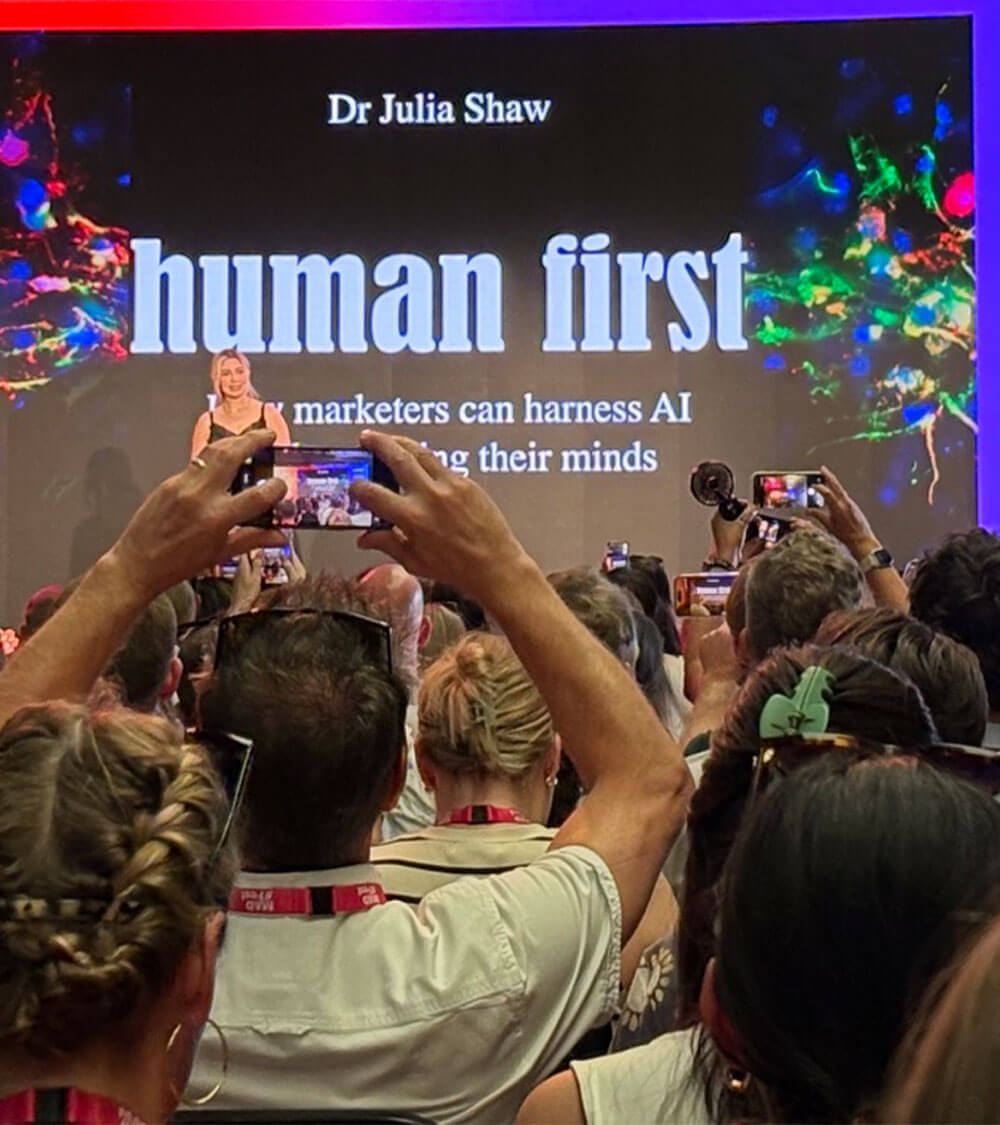
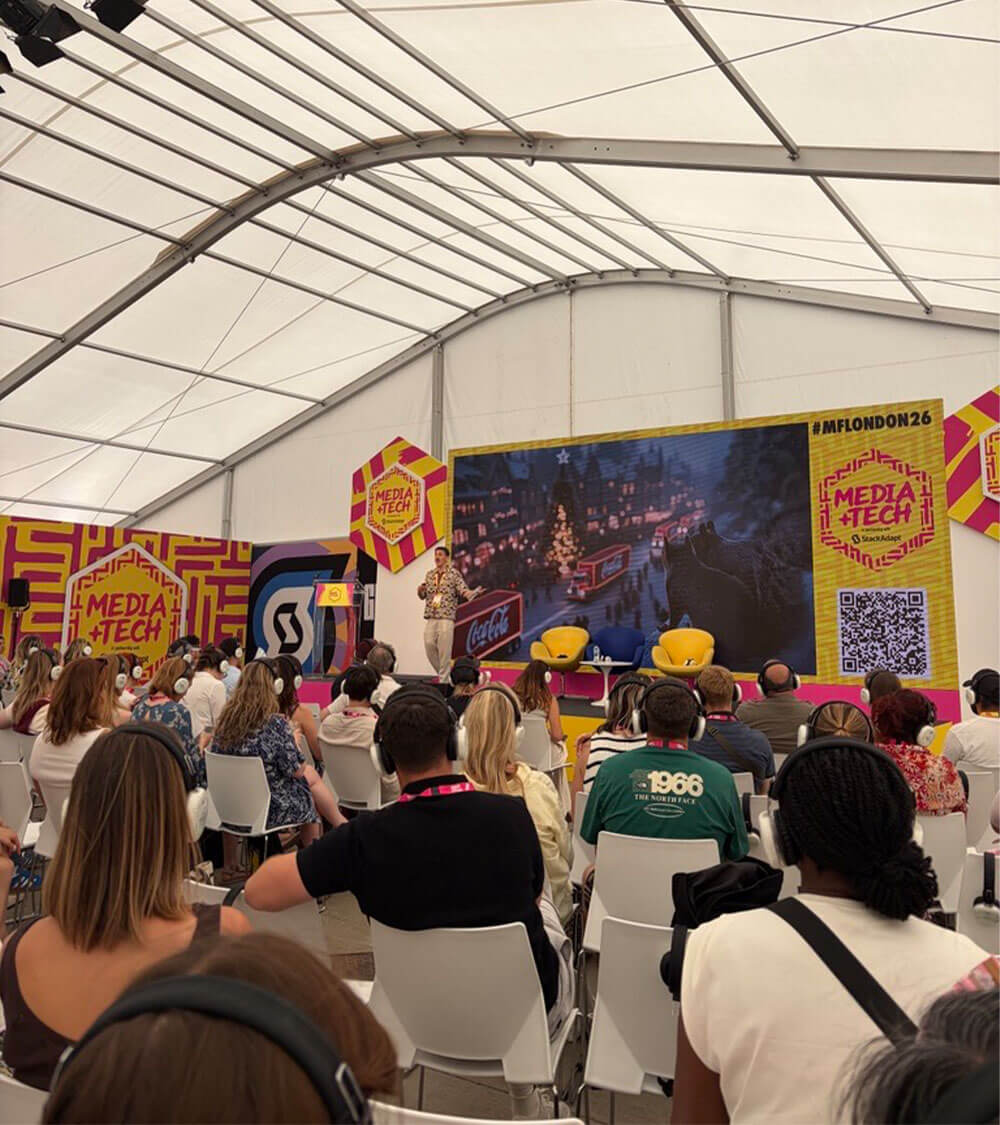
Different talks, one common theme
While Sophie and Chris spent the first day exploring how AI is reshaping digital marketing, brand strategy and customer engagement, Dave and Olivia returned later in the festival to attend a different selection of talks centred around creativity, storytelling and the future of brand building.
Reflecting on the event as a whole, Chris Hancock, Digital Account Manager, noticed just how much the conversation around AI had changed since last year's festival.
What struck me most was how much the conversation around AI had changed. Last year, it was all about adopting AI as quickly as possible. This year, every speaker emphasised the importance of keeping humans in the loop. In a world of AI-generated content, authenticity has become a brand's biggest advantage.
Despite covering different topics, Dave and Olivia found the same message echoed throughout the day: while AI is changing how customers discover brands and make purchasing decisions, human creativity, storytelling and trust remain the qualities that truly differentiate great marketing.
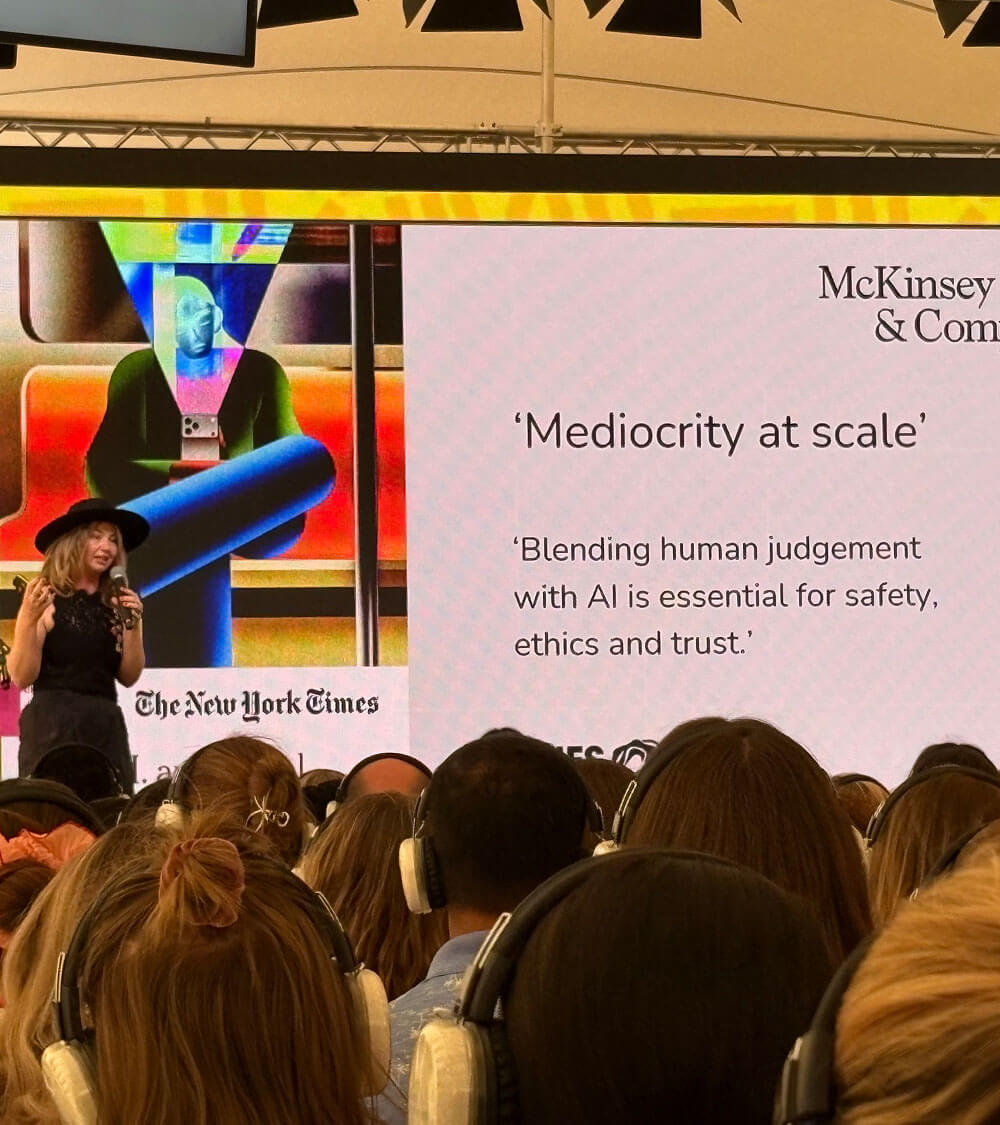
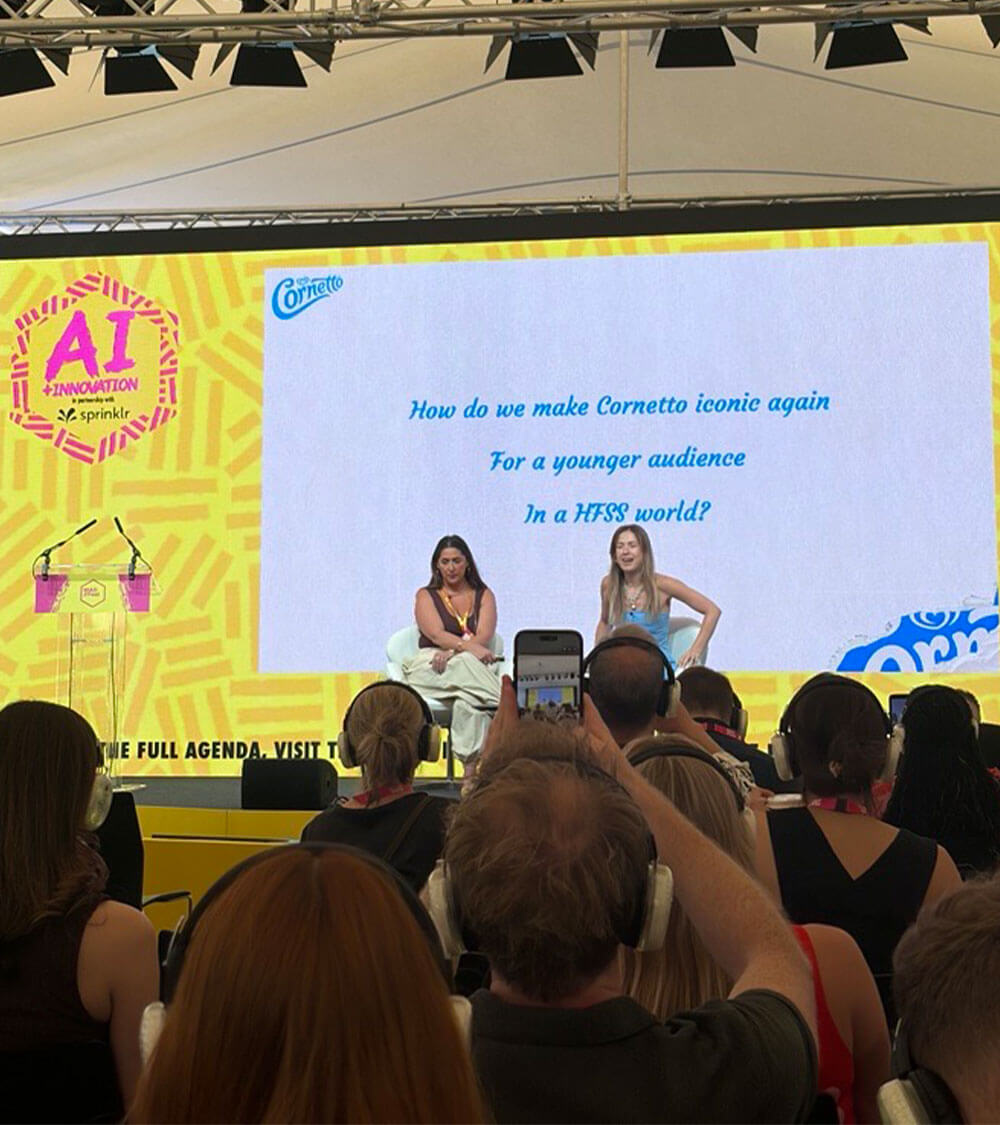
Marketing is no longer just for people
One of the most thought-provoking sessions challenged the idea of the traditional marketing funnel altogether. As AI-powered search assistants become increasingly influential, brands are no longer competing solely for customer attention; they're also competing to be recommended by AI.
Rather than thinking about awareness, consideration and purchase as a linear journey, marketers are now having to optimise for two audiences simultaneously: building memorable brands for people while ensuring their content, authority and data are structured in ways that AI systems can understand and trust.
Storytelling creates what data alone cannot
Another recurring theme was that facts and features rarely change minds by themselves. Speakers spoke about how storytelling, emotion and memorable experiences make for more powerful and longer-lasting connections with audiences than simply information. Whether through brand campaigns, customer experiences or content marketing, the focus should always begin with one question: how do we want people to feel? AI can support content creation, but emotional resonance still comes from understanding people, not prompts.
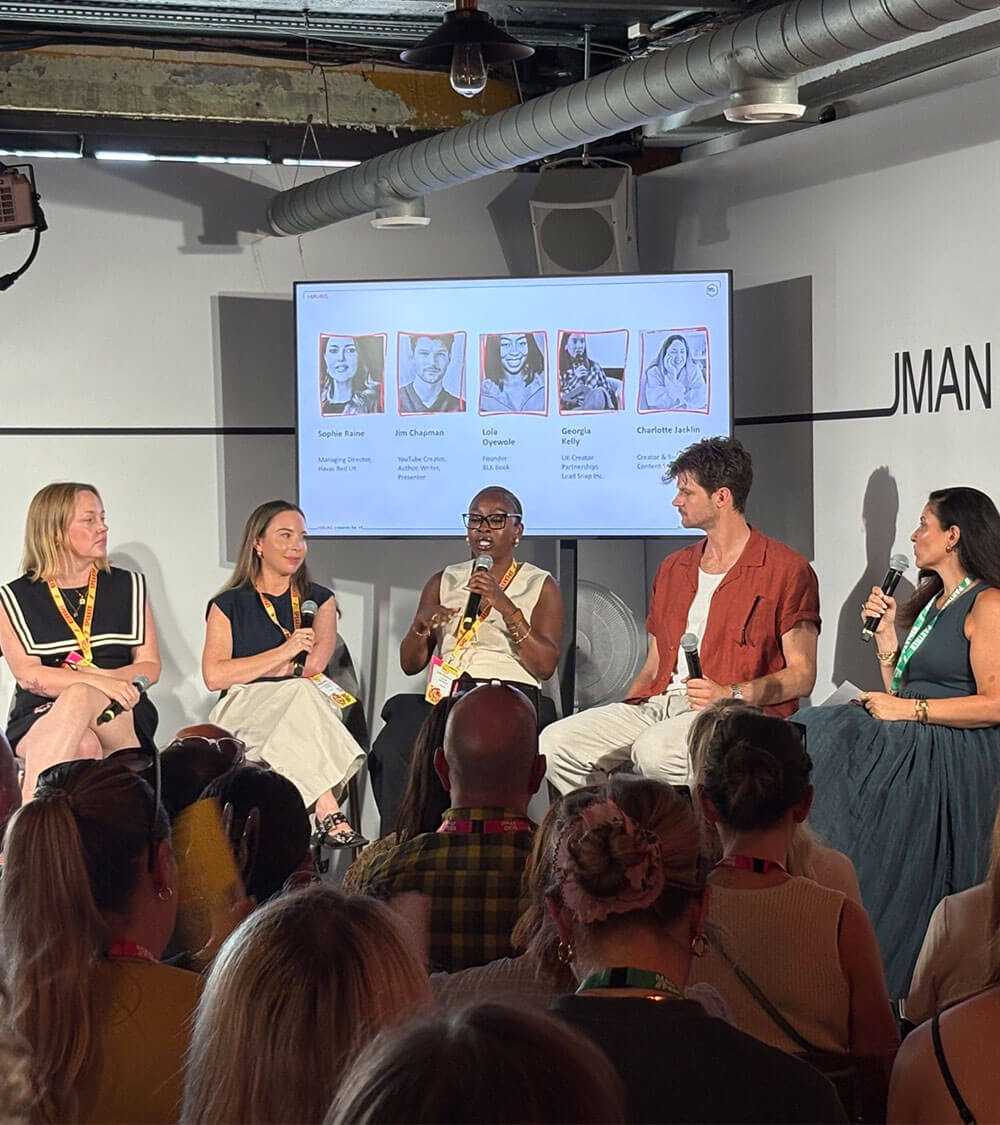
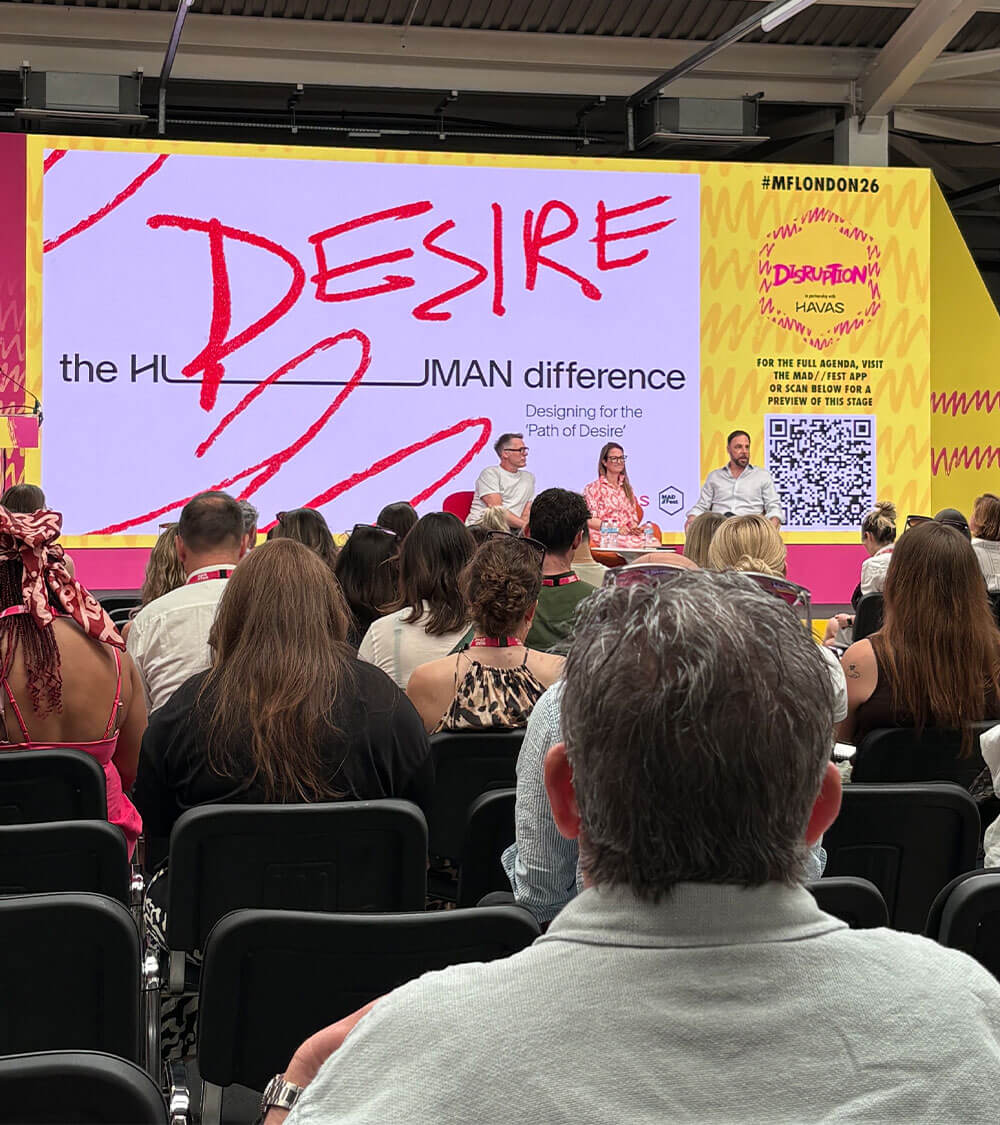
Communities will shape the future of marketing
The rise of creator partnerships and private online communities was another major talking point. Long-term collaborations with creators who genuinely align with a brand were shown to outperform one-off influencer campaigns, while messaging platforms and private communities are becoming increasingly important places for product discovery and recommendations.
Rather than chasing viral moments, brands are finding greater success by building lasting relationships and creating experiences that people genuinely want to share with those closest to them.
Your brand story matters more than ever
Building on the discussions around AI-powered search, Olivia found that brands now need to think beyond the content they publish on their own channels. As large language models increasingly draw on PR coverage, forums, affiliate content, long-form video and other third-party sources to answer users' questions, every touchpoint contributes to how a brand is represented online.
At the same time, speakers reinforced that while AI can help produce content more efficiently, it cannot replace the originality, personality and bold thinking that make brands memorable. In an increasingly saturated digital landscape, creativity and authenticity have become even stronger competitive advantages.
Reflecting on the sessions, Olivia Fry, Digital Account Manager, said:
AI might be telling your story online, but it isn't your brand. How you show up online really matters. PR, outreach, affiliate content, forums and long-form video all help build the authority that large language models use to understand and recommend your business.
Creativity and humanity are still priorities. In such a saturated market, standing out and being bold is essential, and AI simply can't achieve that level of thinking in the same way marketers can. Customers now expect personality – it's become a real USP. AI is a tool, not a replacement for people.
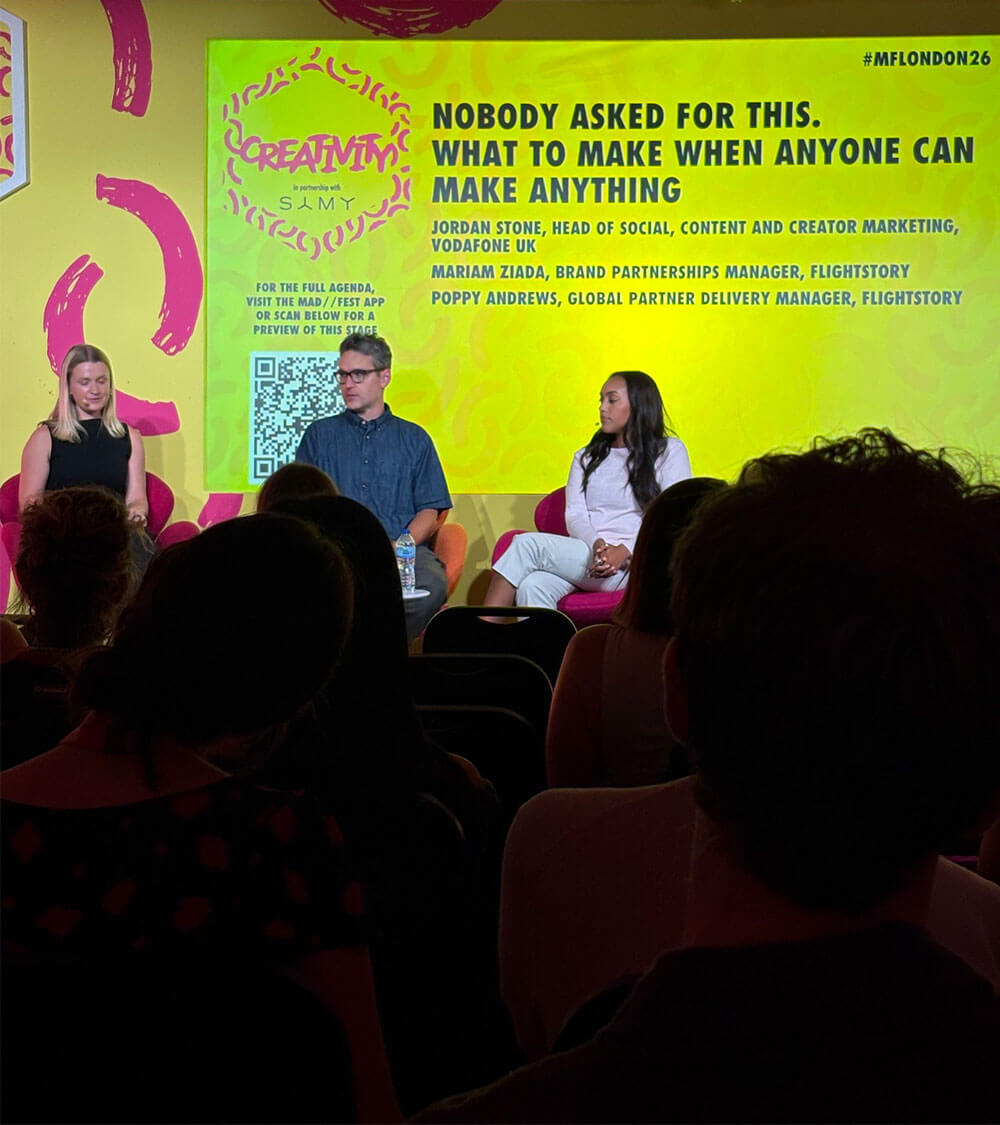
Data should fuel creativity, not replace it
Another standout session explored the relationship between creativity and data. Speaking about Domino's UK, one presenter explained how creative and data teams should no longer operate separately but work together to shape marketing strategy.
Rather than using customer data simply to report on performance, businesses are increasingly using it to predict demand, test new ideas and uncover opportunities for innovation.
The example of Domino's successfully expanding beyond pizza into products such as chicken demonstrated how commercial data can inspire creative thinking and support confident decision-making.
For Olivia, it reinforced another recurring message from the festival: AI and data are most powerful when they help marketers make better decisions, not make the decisions for them.
Why it matters
MAD//Fest 2026 highlighted just how quickly the marketing landscape is evolving. While AI is changing the way brands create content, reach audiences and even influence purchasing decisions, the festival made one thing abundantly clear: technology alone isn't enough. Across every stage, speakers returned to the same core message. The brands that will thrive are those that combine the efficiency of AI with the creativity, authenticity and strategic thinking that only people can provide. Whether through compelling storytelling, trusted communities, connected customer experiences or memorable brand moments, human insight remains marketing's greatest competitive advantage.
For the Blue Frontier team, the event reinforced many of the principles we already champion in our work. AI has an important role to play in improving efficiency and unlocking new opportunities, but the strongest marketing will always be built on creativity, trust and genuine human connection.
As the industry continues to evolve, we're excited to keep exploring new technologies while ensuring people remain at the heart of every strategy, campaign and creative idea.
Stay tuned for more insights from industry events, digital trends and behind-the-scenes updates from the Blue Frontier team.