

The outcomes you need, delivered by one partner
Many organisations are trying to modernise ageing systems, reduce operational cost, and improve the experience they deliver to customers, stakeholders, or staff, all while keeping the business running and managing the risk that comes with significant change. Digital transformation initiatives should make this easier to achieve, not add another layer of complexity on top.
We help by acting as a single partner across the full transformation journey, rather than one of several suppliers you need to coordinate yourself. From the initial strategy through to development, systems integration, change management, and ongoing support, everything is delivered by one team who stays focused on the outcome you are working towards, not just the project brief in front of them.
End-to-end digital transformation support
Service
Market Research
We uncover the market insight, customer behaviour, and competitor intelligence needed to build a transformation strategy grounded in evidence rather than assumption.
Service
Transformation Strategy
We turn business goals into a clear, phased roadmap, prioritising the initiatives that will deliver the greatest commercial and operational impact.
Service
Software Development
Our development teams design, build, and integrate secure, scalable software that connects seamlessly with your existing systems, data, and processes.
Service
UX design & engineering
We design and build digital experiences that are intuitive for users and technically robust, improving engagement without compromising performance or security.
Service
Strategic IT Planning
We help you plan technology investment around business priorities, balancing innovation, budget, and risk to support long-term operational resilience and growth.
Service
Cyber Security
We protect your systems, data, and reputation with security measures built around real business risk, not generic, one-size-fits-all checklists alone.
Service
Ongoing maintenance
We keep your systems secure, up to date, and performing at their best long after go-live, protecting the value of your investment.
How we approach transformation projects
01
Discovery & Insight
We explore your organisation's current systems, culture, and goals, working closely with your stakeholders to define what a successful transformation looks like for your business. Our product owners and market researchers also work closely together to identify what opportunities exist, what market challenges you need to overcome, and what your end users expect to see.
02
Strategy & Roadmap
We gather primary data on your market, operations, competitors, and audiences to build a commercially viable strategy, then map this into a phased roadmap with clear deliverables, timelines, and budgets. By taking a data-driven approach, we ensure that your roadmap meets the needs of your business, accounts for competitor progress, and will ultimately support clear return on investment.
03
Design & Build
Our development, software, and infrastructure teams design, build, and integrate the tools, platforms, and systems your transformation depends on, including connecting new technology with your existing legacy systems. Our UX engineers then take care of the front-end – ensuring that your systems feel intuitive, user-friendly, and aesthetically aligned with your business and branding.
04
Launch & Adoption
We support the people side of transformation through structured onboarding, training, and communication, helping your teams and customers adopt new ways of working with confidence. From training materials such as guides and video tutorials, to external PR and marketing, our teams help make sure your transformation outcomes are understood and promoted in the right ways.
05
Support & Maintenance
Once live, we provide ongoing maintenance, monitoring, and optimisation of your systems, so your transformation continues to deliver value long after go-live. With teams covering cyber security, compliance, SEO, GEO, hosting, and development, you can feel assured that we’ll keep your systems secure, updated, and discoverable long-term.
Bridging legacy systems with what comes next
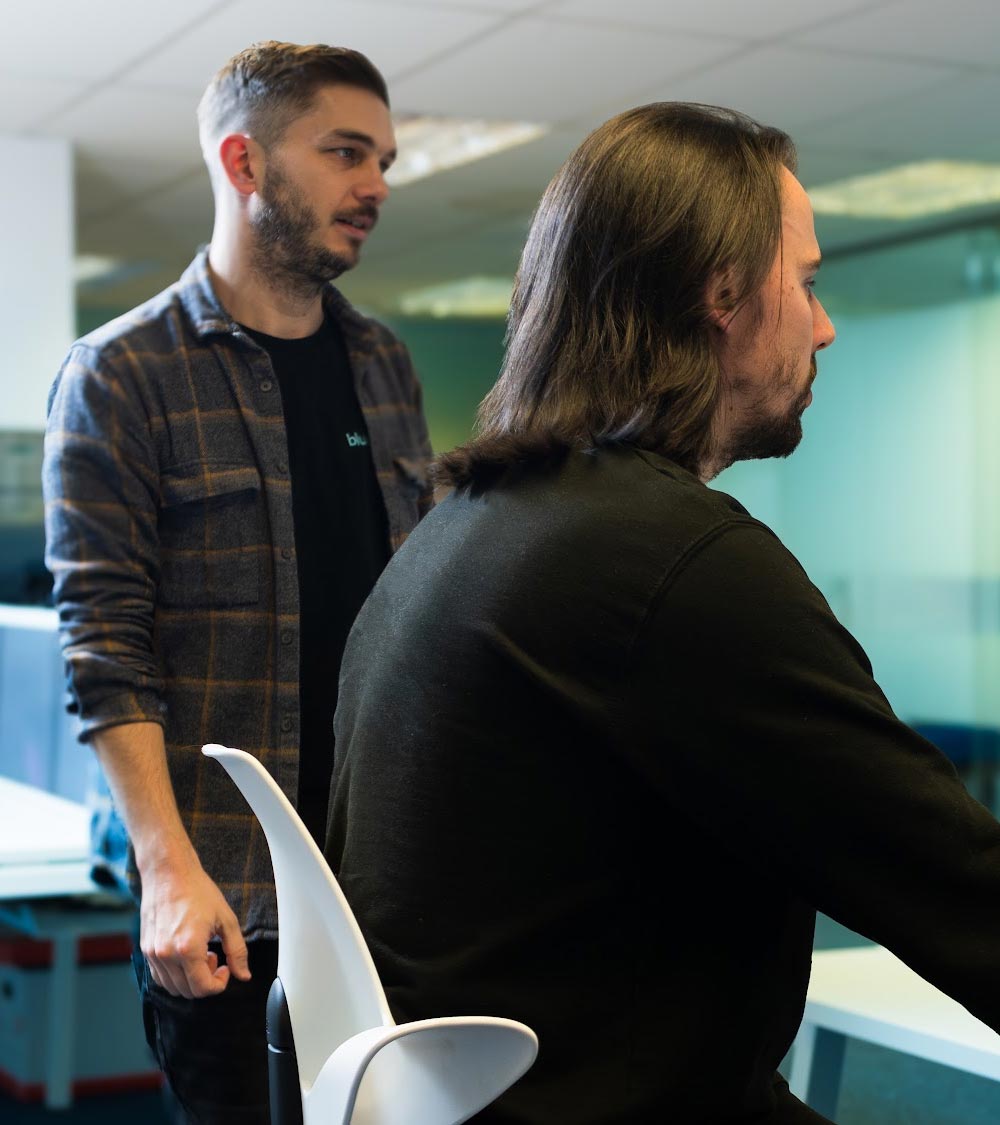
Digital transformation rarely means starting again. It usually means finding a way to modernise around the existing systems, data, and processes that already run your business. Our development and infrastructure teams have extensive experience integrating new platforms, software, and API-driven tools with legacy systems, so you can move forward without risking business continuity issues or losing what already works.
We can also support the safe integration of AI into your transformation, helping you understand the requirements around responsible and ethical use. Our AI enablement specialists help ensure AI technologies are implemented to the highest standards of security, for both your infrastructure and your data.
Why change management makes or breaks transformation
The technology is rarely the reason a transformation project falls short. Research from McKinsey has found that a majority of digital transformation initiatives fail to deliver their intended value primarily because of employee resistance and a lack of adoption, rather than poor technology choices. However well designed a new system might be, it only creates value if the people using it understand it, trust it, and want to use it.
We can build change management support into your transformation project, rather than treating it as an afterthought. Internal and external communications keep stakeholders informed as the project progresses, whilst structured onboarding introduces new systems and processes as they go live. We can also support onboarding processes with bespoke training materials that give teams the confidence to make full use of what has been built.

Case Study
Supporting a leading medical company through large-scale transformation
01
The challenge
A long-standing Blue Frontier client in the medical sector, whose identity remains confidential under NDA, needed to modernise a complex landscape of ageing systems spanning CRM, bookings, data collection, laboratory analysis, customer portals, and payments. These disconnected platforms were limiting internal efficiency, restricting the flow of information between teams and making it increasingly difficult to introduce improvements at scale.
The organisation had also accumulated years of valuable but underutilised customer data. The challenge was to unlock its potential while carefully managing dependencies between critical systems and minimising disruption to day-to-day operations - all while continuing to improve the experience of the people who rely on its services.

02
Our approach
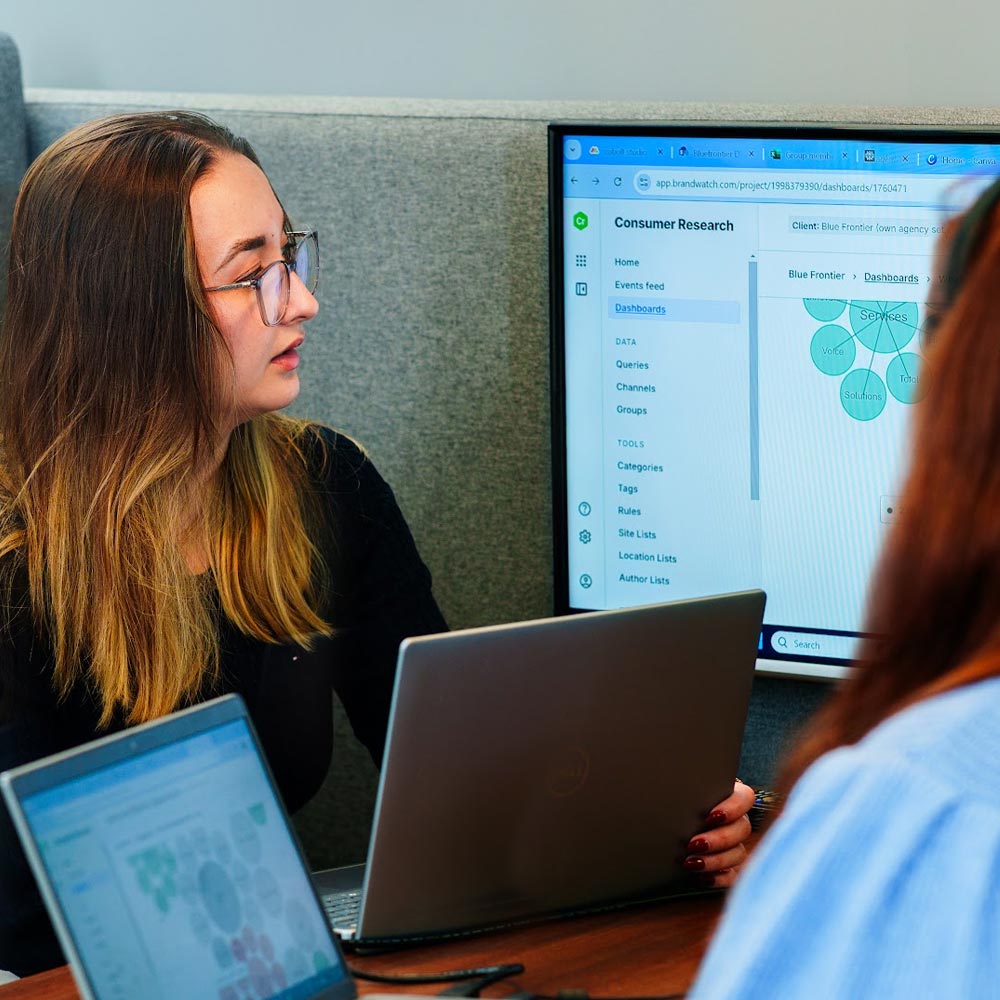
We began with a comprehensive analysis of the organisation’s CRM, booking, data-collection, laboratory-analysis, customer-portals, and payment platforms. Working closely with technical stakeholders, we mapped the relationships between these systems to identify key dependencies, technical limitations, and opportunities for improvement.
We combined these findings with primary market research into audience needs and emerging market disruptors, as well as competitor analysis and internal stakeholder questionnaires. This gave us a clear, data-driven understanding of where transformation could deliver the greatest value and helped us establish a focused strategy and roadmap for the development phase.
03
The outcome, so far
Two years into the project, we have delivered three phases of the transformation programme, including the in depth auditing, consultation, and foundational market research along with a multi-phase technical strategy and product roadmap.
The project is now deep into its development phase, with Blue Frontier continuing to take a technical lead on consultation, project management, and software development. We will continue supporting the client through implementation and the successful completion of their transformation in the coming years.

Experienced in a wide range of sectors
Complex, often highly regulated environments call for a partner who understands both the technology and the sector. We work across a broad range of industries, including:









The team behind your transformation
Every transformation project is supported by a multidisciplinary team rather than a single specialist. Depending on the scope of your project, this may involve strategists, product owners, developers, and infrastructure or cyber security experts.
Meet a few of our team members who support with digital transformation:











Your questions about digital transformation, answered
Digital transformation is the process of using technology, data, and new ways of working to improve how an organisation operates and how it serves its customers, staff, or other users. It goes beyond simply adopting new software or launching a new website; done well, it changes underlying processes, decision-making, and culture, not just the tools people use day to day. For most organisations, this means modernising systems, using data more effectively, and often introducing automation or AI, all while considering the impact on both business performance and the people relying on those systems. We build every transformation project around this principle - technology in service of a measurable business and human outcome, not technology for its own sake.
The most common benefits are improved operational efficiency, reduced costs, better decision-making through access to more reliable data, and a stronger experience for customers, stakeholders, or staff. A successful transformation programme can also improve resilience, making a business less dependent on outdated systems, manual processes, or a small number of people holding critical knowledge. How much benefit is realised is closely tied to how clearly the transformation is scoped against business outcomes from the outset, which is why we begin every project with discovery and strategy work before any development starts.
Not usually. Replacing legacy systems entirely is often more disruptive, costly, and risky than necessary - and in most cases is not required to achieve the outcomes an organisation is looking for. Many successful transformations instead focus on integrating new technology, platforms, or automation around existing systems, so the organisation benefits from modernisation without migrating every process at once. Legacy integration is one of the areas we prioritise, precisely because most of our clients need transformation to work alongside their existing infrastructure, not disrupt it.
AI is increasingly used within digital transformation to help organisations automate repetitive tasks, surface insights from data that would otherwise go unused, and support faster decision-making. It tends to be most successful when introduced with clear governance, strong data security, and a genuine business case, rather than as a standalone initiative disconnected from wider strategy. We often treat AI as one part of a broader transformation strategy rather than a project in its own right, so its use stays secure, properly governed, and tied to a measurable outcome.
Timelines vary significantly depending on scope, ranging from a few months for a focused piece of work to a number of years for large, organisation-wide change. Rather than following one rigid timeline, most successful transformations are broken into phases, each with its own deliverables and review points, so value can be measured throughout rather than only at the very end. We work in phased roadmaps for this reason, giving organisations visibility of progress at each stage rather than a single, distant go-live date.
In most cases, yes. Where we do not have a case study that matches your exact sector or technology – or where we are bound by NDAs – you can feel assured that our breadth of experience across development, infrastructure, and consultancy means we can draw on directly comparable projects. We will always be transparent about where our experience lies and will provide the closest matching examples of our work wherever possible.
We are an ISO accredited agency, and quality assurance is built into every stage of our process. This includes regular workshops and sign-off at every delivery stage, with support from in-house product owners and project managers who oversee your project from start to finish, reducing risk and supporting any governance requirements you may have.