Most organisations don't set out to build a fragmented IT environment.
It usually happens gradually.
For example, a managed IT provider is brought in to support users and devices. A cyber security specialist is engaged to strengthen defences or satisfy compliance requirements. A cloud consultant joins a migration project. An IT governance and compliance expert is introduced when regulations become more demanding.
Over time, however, many organisations find themselves managing a collection of suppliers, platforms, and processes that have evolved independently of one another. While each component may work well on its own, the overall environment can become increasingly difficult to manage and optimise.
This raises an important question: if you were designing your IT environment from scratch today, would you build it this way?
At Blue Frontier, we take a different approach.
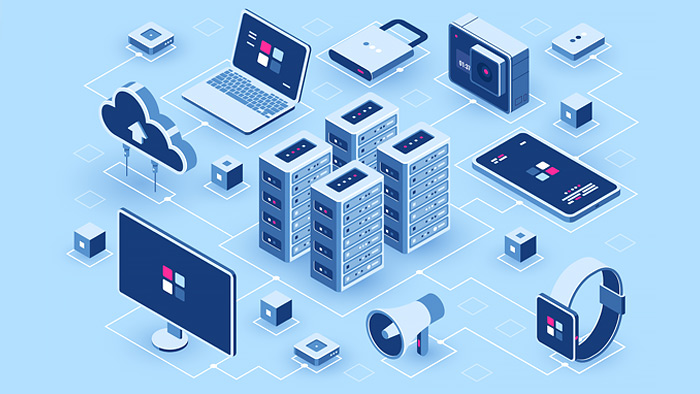
We believe IT operations, cyber security, cloud infrastructure, and information governance are most effective when they are designed and managed as a single system. Rather than treating these disciplines as separate functions, we see them as interconnected parts of the same environment, each influencing the performance, resilience, and security of the others.
It's an approach that shapes how we deliver technical services, and it's based on a simple observation: the biggest challenges organisations face rarely sit within a single discipline. More often than not, they emerge at the points where different disciplines, teams, or suppliers meet.
Risk lives in the gaps
When organisations experience a security incident, service outage, or compliance issue, the root cause is not always a technical failure. More often, the issue lies in a lack of ownership and accountability.
One provider assumes another is responsible. Critical information isn’t shared. Processes don’t align, and visibility across the environment is limited. What appears to be a comprehensive solution on paper can reveal significant gaps when tested in practice.
We’ve seen this repeatedly when supporting organisations with complex supplier ecosystems. The challenge isn’t necessarily that any individual provider is underperforming; it’s that no one has responsibility for the bigger picture.
As technology environments become increasingly interconnected, this lack of end-to-end accountability creates risks that can remain hidden until something goes wrong. A joined-up approach to cybersecurity governance helps organisations establish clearer ownership, align security policies and ensure risks are managed consistently across their technology environment.

Complexity creates hidden costs
Fragmentation doesn’t just increase risk; it can also introduce additional costs across an organisation.
This isn’t always through higher supplier fees, but through the operational friction that develops between systems, processes, and providers. Duplicate tooling, overlapping licences, multiple stakeholder meetings, and disconnected support processes can all consume valuable time and budget without delivering additional value.
These costs rarely appear on a single invoice. Instead, they build gradually across the organisation, making them harder to identify and address.
As supplier landscapes become more complex, it becomes increasingly difficult to understand where investment is being directed, who owns specific outcomes, and whether the overall technology environment is delivering the value it should. Managed IT services that work alongside security, cloud and governance expertise can help provide greater visibility and a clearer view of how technology investment supports wider business objectives.

Security and compliance are most effective by design
Security, governance, and compliance are often treated as projects that sit alongside IT. But in reality, they work best when they are built into the environment from the beginning.
When security is embedded into infrastructure decisions, cloud strategy, identity management, and user processes, organisations gain stronger protection without creating unnecessary complexity.
When governance requirements are considered throughout the design process, evidence gathering becomes significantly easier because compliance is a natural by-product of how the environment operates, rather than a separate exercise undertaken before an audit.
This is where IT security and compliance need to work together. A connected approach helps organisations align technical controls with policies, regulatory requirements and business responsibilities, rather than managing them as separate activities.
As organisations begin adopting AI tools, the same principles become increasingly important. Effective AI governance helps establish how these tools are selected, used and monitored, while AI risk management helps identify and address potential issues around data, security and accountability. Building these considerations into wider governance frameworks also supports AI compliance and the responsible use of emerging technologies.

A more connected approach
A unified approach changes what organisations can achieve.
Rather than managing separate conversations around infrastructure, security, compliance, and cloud strategy, organisations gain a joined-up view of their technology landscape.
Identity, endpoint, network, cloud, and data controls can be designed to work together. Strategic decisions can be evaluated from multiple perspectives simultaneously. Incident response becomes faster because the people responding already understand the wider environment.
Most importantly, organisations gain clarity. They know who is accountable, and they have greater visibility over risk. Ultimately, businesses make decisions with confidence, knowing the broader implications have been considered.
This connected approach also provides a stronger foundation for responsible AI, helping organisations introduce new technologies with appropriate oversight, security measures and accountability from the outset.

Looking beyond traditional IT models
We’re not suggesting that every organisation should immediately consolidate all technology services under a single provider. Many businesses have valid reasons for their existing arrangements, and every organisation’s requirements, priorities, and operating models are different.
However, we do believe the traditional fragmented approach is worth reviewing. As cyber threats continue to evolve, regulatory expectations increase, and technology becomes increasingly critical to business performance, the challenges created by disconnected systems, suppliers, and processes are becoming harder to ignore.
The organisations that achieve the strongest outcomes are often those that move away from viewing IT operations, cyber security, cloud infrastructure, and governance as separate areas. Instead, they recognise that these elements are closely connected and need to work together as part of one wider technology ecosystem.
This is the approach we’ve deliberately built at Blue Frontier. By bringing together managed IT services, cyber security, cloud infrastructure, and information governance expertise under one roof, we help organisations reduce complexity, strengthen resilience, and make more informed technology decisions.
When every part of your technology environment works together, organisations are better positioned to improve security, maintain compliance, and achieve greater operational efficiency.
Discover how a connected approach to IT can strengthen your organisation. Contact us today.