
AI platforms have been widely adopted by businesses across the globe, offering the capability to generate images, videos, text, and audio since the turn of the decade. With the recent news that AI platform providers will need to add AI watermarks in accordance with Article 50 of the EU's AI Act, many businesses are wondering what this means for them.
Read on to find out more about AI watermarks, how to use them responsibly, and how businesses have responded to the news.
What is an AI watermark?
An AI watermark can either be a hidden or visible marker that is embedded within AI-generated content, including text, audio, images, and videos, to identify its origin or provenance.
These watermarks help to provide greater transparency and fraud detection. However, watermarks can be removed or damaged, detectors can make mistakes, and unwatermarked content can still be AI-generated. It's worth noting that invisible watermarks do not affect the appearance of content; however, they will still be identified by detection systems.
Meanwhile, the Coalition for Content Provenance and Authenticity (C2PA) refers to the technical standard that embeds secure metadata into photos, videos, and audio files to identify their origin.
Here are just a few AI watermarks to be aware of:
- Visible watermarks – A logo or label that is attached to an AI-generated image or video.
- Hidden watermarks – An unseen pattern that is within pixels or audio that AI detection platforms can identify even if content is edited or compressed.
- Text watermark – Patterns that are added to AI-generated text so algorithms can understand its origin.
Why and when were AI watermarks introduced?
AI watermarks are being adopted to comply with Article 50 of the European Union's AI Act. This ensures that generative AI providers watermark synthetic content, so it is clearly detectable as artificially generated or manipulated.
It came into effect on 2nd August 2026 for AI-generated content, with the grace period ending on 2nd December 2026. AI providers that haven't adopted it by this point are subject to fines of up to €15 million or 3% of a company's total annual worldwide turnover, whichever is higher, according to The Guardian in July 2026. Marking extends to deep-fake disclosures and content on topics that inform the public on matters of public interest for greater transparency.
Which AI platforms have adopted AI Watermarks?
AI watermarks have been introduced by AI providers in recent years. According to Neil Patel on 3rd September, Google, Anthropic, OpenAI, Nvidia, and ElevenLabs all use Google's SynthID technology to write hidden watermarks in images, text, and other assets. Of those identified, only Microsoft was using watermarks with an unknown provider, while X's Grok has only partially adopted it with an unknown technology, as of early September 2026.
- OpenAI - According to Open AI, the team behind ChatGPT, they have been using AI watermarking on synthetic voices since 2024; however, they introduced it on supported audio files and images on 31st July 2026 as part of their plans for advancing content governance.
- Google - Google had previously tested watermarks on images in 2023 according to the BBC, text watermarking in October 2024 according to TechCrunch, and on AI-edited photos in February 2025. In August, TechCrunch reported that Google announced that users could hide visible watermarks, but that SynthID and C2PA standard-related metadata would remain.
- Claude - On 14th August, Claude confirmed that it had signed the Code of Practice alongside other generative AI providers.

What does this mean for businesses using AI?
For now, the changes are mainly for AI providers; however, there are several things to consider.
Traceable content
With watermarks embedding invisible patterns and metadata, they will travel with your content. This means that detection APIs, platforms, and software will be able to identify if AI was used in the content generation despite copy and pasting or tweaking. With watermarks identifying patterns of text, it makes it easier for detection platforms to spot fully AI-generated content.
Regulatory compliance
The EU's AI Act indicates that regulations are going to be more common in guidance around AI usage. While AI providers will now need to comply with AI watermarking on their platforms, the likely next stage is how businesses use AI-generated content and whether it's transparent.
Quality content will outperform
While the focus is currently on AI watermarks, businesses will still need to prioritise content quality, as this is an area where they can be penalised. In June 2026, Search Engine Journal revealed that Google may be penalising AI-generated content as "thin content", referring to assets that provide little to no value. We suggest moving instead to offering expertise and unique insight to provide an original, human perspective.
Client relationships
In client and vendor relationships, AI watermarking on work where AI-generated content has not been specified risks losing trust. After all, heavy AI usage can call into question the value and quality of the work and so it needs transparency and human oversight to ensure your relationships are not affected.
How to use AI watermarking responsibly
Watermarks allow businesses to provide greater transparency around their AI usage. Here are a few ways in which you can use it responsibly.
Disclose AI usage
If you are using AI-generated content, the best course of action is to disclose it fully to your customers and audiences. Businesses that overtly use it without human oversight should be aware that, in an era of "AI slop", there are often negative opinions shared around content that provides no value. Use labels like "fully generated" and "AI-assisted" to distinguish AI usage when applicable.
See watermarks as indicators
Watermarks are signs that content has been touched up or processed with AI, but it doesn't explain the extent to which it has been used in the generation process. This means that work can also still have watermarks even if they've been somewhat edited.
Maintain provenance metadata
Metadata allows customers to see the origin of your content in addition to visible AI watermarks, and so it's important that this is reflective of your entire AI content-generation process. While this can be viewed by anyone, it's especially helpful for those with accessibility needs, so consider elements like alt text and captions on assets.
Document governance
It's important that your business is using a consistent AI-marking by determining what assets require it, who reviews content, and how long governance is recorded. This will allow you to evidence your usage in the event you are asked to disclose it.
Require partners to provide documentation
For full transparency, ask your clients or partners to provide documentation on their provenance. This may include audits or specifications within statements of work to ensure that you are aware of AI-usage.
How are businesses responding to AI watermarks?
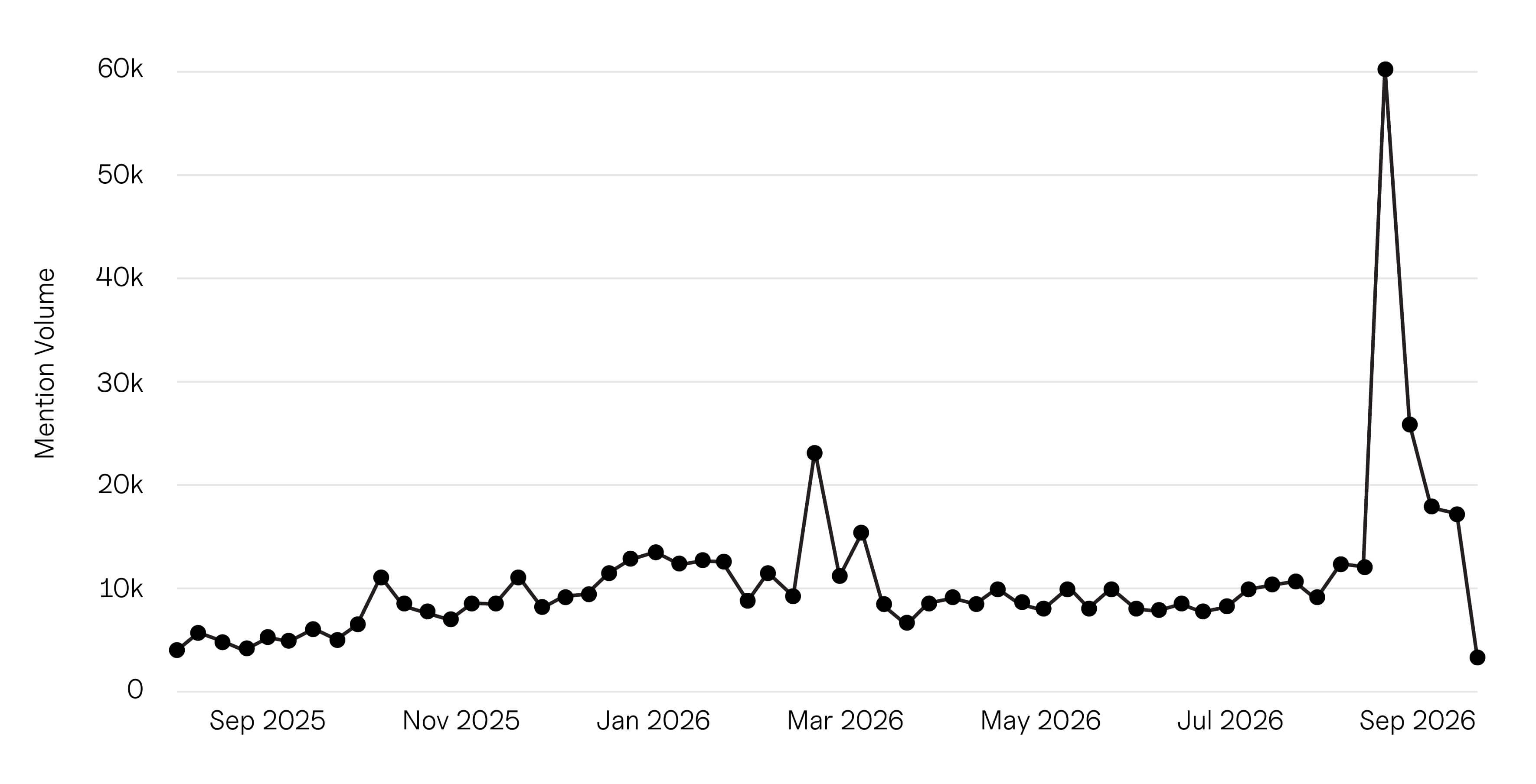
Our in-house market research team has provided unique, first-party data to show how businesses are talking about AI. As shown in the graph below, the mention volume of watermarking and AI saw a sharp peak in early August 2026, with 78k mentions of watermarking between 9th August to 8th September alone. This is in response to the introduction of AI watermarking from AI platform providers.
Our results also show that conversations attributed to neutral and anger sentiment spiked in August, with 65% of users being neutral on AI watermarking, while anger mentions were second with 33%.
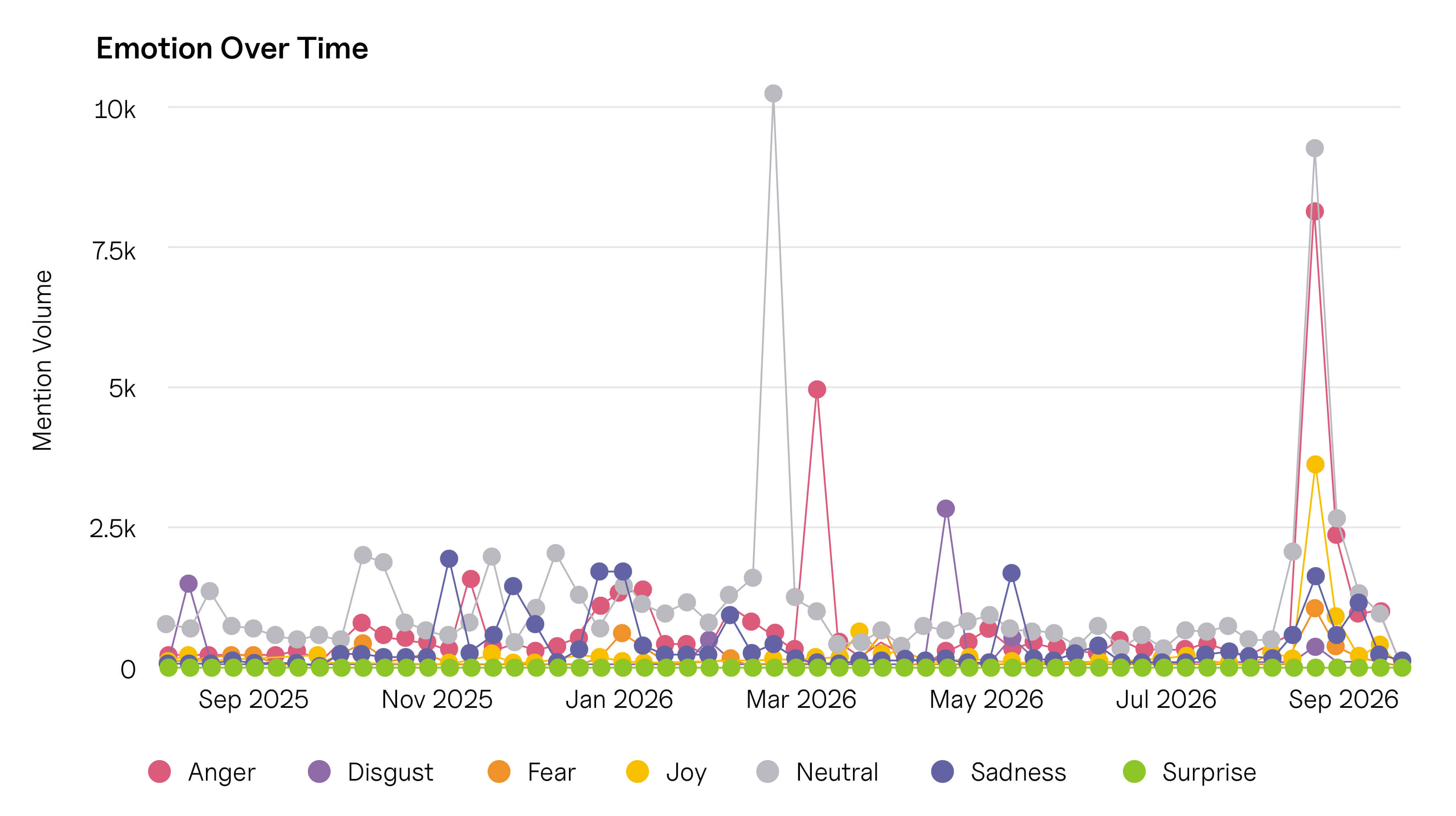
Anger contributors included questioning whether AI watermarks would change what a model would produce, people being concerned about commercial users being discouraged from using AI platforms like Anthropic, and skepticism around how technically effective it will work in the long-term.
Meanwhile, joy is also a common emotion experienced by some, as it provides greater clarity over whether AI text, images, videos, or audio is genuine.
These results show that conversations around AI watermarking is becoming more widespread since AI providers have begun to adopt policies, especially as the next development will likely affect businesses themselves. It also indicates that users are craving authentic content, so businesses should seek to provide human experiences that connect with potential customers.
How Blue Frontier can help
Businesses need to be one step ahead of the curve and start to evidence their AI usage to maintain trust from their customer base. We recognise that it may be difficult to know where to start and so our team of specialists can provide expert support with AI policy, usage, or application.